Jyotirlinga
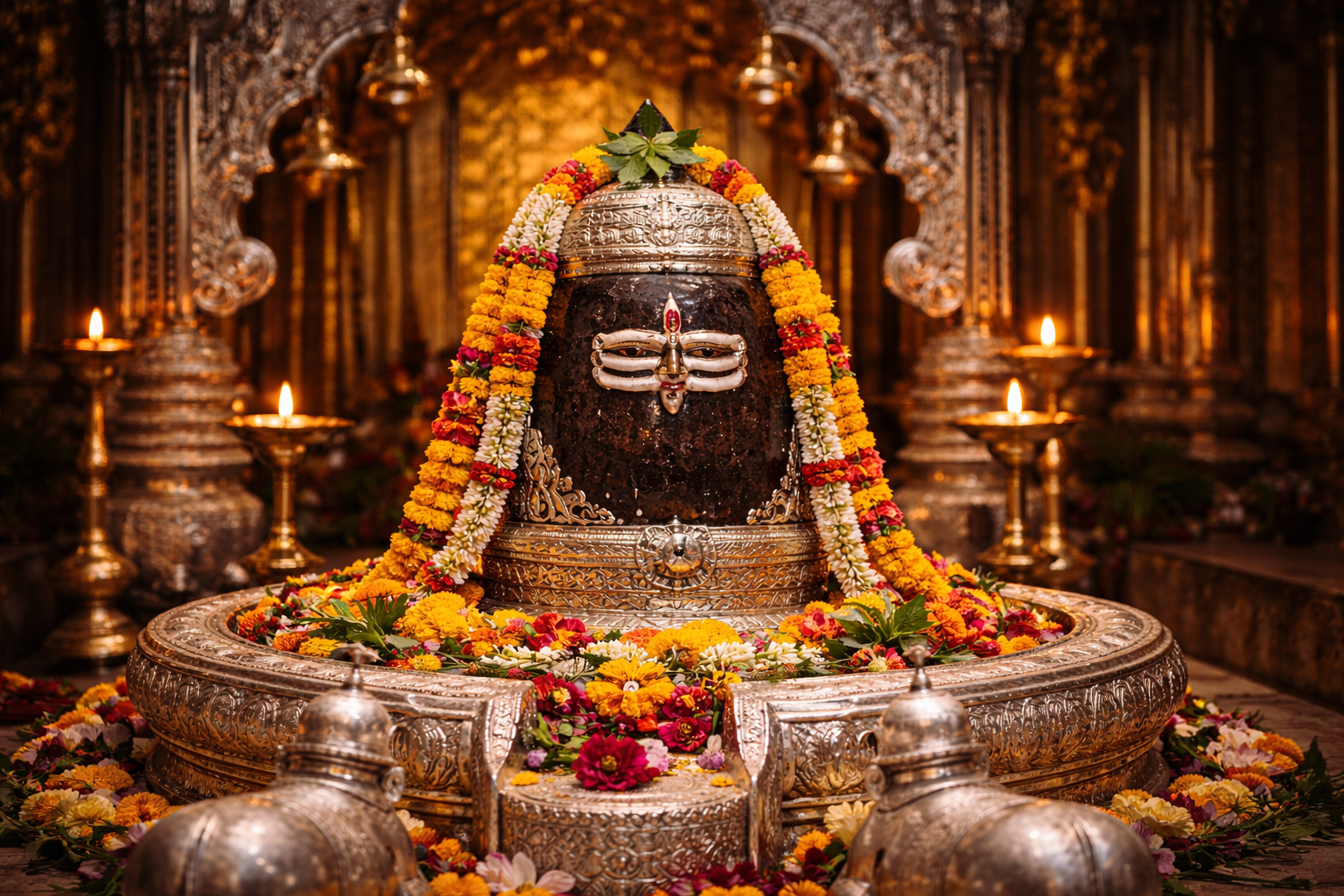
What is Jyotirlinga?
A Jyotirlinga is the most sacred representation of Lord Shiva in Hinduism. The word refers to a divine form where Lord Shiva is believed to have appeared as an infinite pillar of light. In these holy places, Shiva is worshipped in the form of a Lingam that represents his eternal and formless nature. According to the Shiva Purana, the Jyotirlingas are not ordinary Shiva temples. They are places where Lord Shiva revealed himself as a powerful column of divine light (Jyoti) that has neither beginning nor end. These sacred sites are believed to contain immense spiritual energy and divine presence. Devotees believe that visiting these temples and offering prayers helps remove sins, grants spiritual growth, and brings peace, prosperity, and liberation from the cycle of birth and death.
Meaning of the Word "Jyotirlinga"
The word Jyotirlinga comes from two Sanskrit words:
- Jyoti – meaning divine light or radiance.
- Linga – meaning the symbolic form of Lord Shiva.
Therefore, Jyotirlinga literally means "The Radiant Sign of Lord Shiva" or "The Lingam of Divine Light." In spiritual philosophy, the Jyotirlinga represents the infinite and cosmic nature of Lord Shiva. It symbolizes the supreme power that exists beyond form, time, and space.
How Many Jyotirlingas Are There?
According to the Shiva Purana, there are 12 sacred Jyotirlingas located across different parts of India. These temples are considered the holiest abodes of Lord Shiva and are major pilgrimage destinations for devotees.
The twelve Jyotirlingas are:
- Somnath – Gujarat
- Mallikarjuna – Andhra Pradesh
- Mahakaleshwar – Madhya Pradesh
- Omkareshwar – Madhya Pradesh
- Kedarnath – Uttarakhand
- Bhimashankar – Maharashtra
- Kashi Vishwanath – Uttar Pradesh
- Trimbakeshwar – Maharashtra
- Baidyanath – Jharkhand
- Nageshwar – Gujarat
- Rameshwaram – Tamil Nadu
- Grishneshwar – Maharashtra
Devotees believe that visiting all twelve Jyotirlingas during one's lifetime is extremely auspicious and leads to spiritual purification and divine blessings.
12 Jyotirlinga
Somnath Temple
1. Name of Jyotirlinga
Somnath Jyotirlinga
2. Number in Jyotirlinga Sequence
1st Jyotirlinga
3. Story Behind This Jyotirlinga
The story of Somnath Jyotirlinga is closely associated with Chandra, the Moon God. According to ancient scriptures, Daksha Prajapati had 27 daughters, who represent the 27 Nakshatras. All of them were married to Chandra. However, Chandra loved only Rohini and spent most of his time with her. This angered the other wives, who complained to their father Daksha.
Daksha warned Chandra to treat all his wives equally, but Chandra ignored the warning. In anger, Daksha cursed Chandra to lose his brightness and slowly fade away. As the Moon began losing his radiance, the balance of nature was disturbed and the gods became worried.
Seeking relief from the curse, Chandra performed intense penance to Lord Shiva at Prabhas Kshetra. He chanted Shiva's name continuously and worshipped him with deep devotion. Pleased by his devotion, Lord Shiva appeared before him and partially relieved the curse.
Shiva blessed Chandra that he would wax and wane every month instead of disappearing completely. Chandra then established a temple in honor of Lord Shiva at that sacred place. Lord Shiva manifested there as Somnath, meaning "Lord of the Moon". This temple later became the first and most revered Jyotirlinga.
4. Location
Prabhas Patan
Taluka: Veraval
District: Gir Somnath
State: Gujarat, India
5. How to Reach
By Train- Nearest railway station: Veraval Junction (about 5–7 km)
- Connected with Ahmedabad, Rajkot, and major cities
- Well connected by Gujarat State Transport buses
- Regular buses from Ahmedabad, Dwarka, Junagadh, Rajkot
- Nearest Airport: Diu Airport (around 85 km)
- Other airports: Rajkot and Ahmedabad
6. Importance / Benefits of Visiting
- Believed to remove curses and karmic suffering
- Brings peace, prosperity, and mental stability
- Considered highly powerful for Moon-related astrological issues
- Visiting Somnath is believed to grant spiritual purification
7. Famous Rituals
- Rudrabhishek
- Somnath Maha Aarti
- Abhishek with milk, honey, and holy water
- Special pujas during Shravan month and Maha Shivaratri
8. Aarti Timings
- Morning Aarti – 7:00 AM
- Afternoon Aarti – 12:00 PM
- Evening Aarti – 7:00 PM
9. Temple Opening & Closing Time
- Opening Time – 6:00 AM
- Closing Time – 9:00 PM
Kedarnath Temple
1. Name of Jyotirlinga
Kedarnath Jyotirlinga
2. Number in Jyotirlinga Sequence
5th Jyotirlinga
3. Story Behind This Jyotirlinga
The Kedarnath Jyotirlinga is associated with the story of the Pandavas from the Mahabharata. After the Kurukshetra war, the Pandavas felt guilty for killing their relatives and teachers. To seek forgiveness for their sins, they decided to worship Lord Shiva.
However, Lord Shiva did not want to forgive them easily because of the destruction caused by the war. He avoided them and went to the Himalayas disguised as a bull. The Pandavas followed Shiva to the mountains searching for him.
One day Bhima spotted a strange bull grazing in the field and suspected it was Shiva. He tried to catch the bull, but the bull began sinking into the ground. Bhima managed to hold the hump of the bull while the rest of the body disappeared.
Lord Shiva then appeared and blessed the Pandavas for their determination and devotion. The hump of the bull remained at Kedarnath and became the sacred Jyotirlinga. Other parts of the bull appeared at four nearby temples known as the Panch Kedar.
Since then Kedarnath has been one of the holiest pilgrimage sites for devotees of Lord Shiva. The temple stands high in the Himalayas and symbolizes devotion, penance, and liberation.
4. Location
Kedarnath
Taluka: Ukhimath
District: Rudraprayag
State: Uttarakhand, India
5. How to Reach
By Train- Nearest Railway Station: Rishikesh (about 215 km)
- Haridwar is also a major railway hub
- Reach Gaurikund by road via Rishikesh
- From Gaurikund, a 16 km trek leads to Kedarnath temple
- Nearest Airport: Jolly Grant Airport (Dehradun)
- Helicopter services available from Phata, Guptkashi, and Sirsi
6. Importance / Benefits of Visiting
- Believed to wash away sins of past lives
- Highly sacred pilgrimage in the Himalayas
- Part of the Char Dham Yatra
- Brings spiritual liberation and blessings of Lord Shiva
7. Famous Rituals
- Abhishek with ghee and water
- Rudrabhishek
- Special pujas during Kedarnath opening ceremony
- Shivratri celebrations
8. Aarti Timings
- Morning Aarti – around 4:00 AM
- Evening Aarti – around 6:00 PM
9. Temple Opening & Closing Time
- Opening Time – 4:00 AM
- Closing Time – 3:00 PM (afternoon break) and evening darshan till night
- Temple remains closed during winter months due to heavy snowfall
Mallikarjuna Temple
1. Name of Jyotirlinga
Mallikarjuna Jyotirlinga
2. Number in Jyotirlinga Sequence
2nd Jyotirlinga
3. Story Behind This Jyotirlinga
According to ancient Hindu scriptures, Lord Shiva and Goddess Parvati had two sons, Lord Ganesha and Lord Kartikeya. Once a discussion arose between them about who should be married first. To settle the matter, Shiva and Parvati proposed a challenge: whoever circled the entire universe and returned first would be married first. Lord Kartikeya immediately mounted his peacock and began traveling across the world. Lord Ganesha, however, calmly circled his parents Shiva and Parvati, declaring that his parents themselves represented the entire universe.
Pleased with his wisdom, Shiva and Parvati declared Ganesha the winner and arranged his marriage first.
When Kartikeya returned and learned about this, he felt hurt and left Mount Kailash. He went to the forests of Krauncha Mountain and began living in solitude. Seeing their son saddened, Shiva and Parvati went there to console him.
It is believed that Lord Shiva manifested there in the form of a Jyotirlinga called Mallikarjuna, while Goddess Parvati appeared as Bhramaramba. Devotees believe that Lord Shiva still resides here to bless devotees who seek peace, harmony, and family unity.
This sacred site became one of the twelve Jyotirlingas and remains a major pilgrimage center.
4. Location
Srisailam
Taluka: Srisailam
District: Nandyal
State: Andhra Pradesh
5. How to Reach
Train- Nearest station: Markapur Road (≈85 km)
- Regular buses from Hyderabad, Kurnool, and Vijayawada
- Nearest airport: Hyderabad (≈215 km)
6. Importance / Benefits
- One of the most powerful Shaiva and Shakti pilgrimage centers
- Believed to grant family harmony and spiritual progress
7. Famous Rituals
- Rudrabhishek
- Kalyanotsavam
- Karthika Masam celebrations
8. Aarti Timings
- Morning Aarti – 5:30 AM
- Evening Aarti – 6:30 PM
9. Temple Opening & Closing Time
- 4:30 AM – 10:00 PM
Mahakaleshwar Temple
1. Name of Jyotirlinga
Mahakaleshwar Jyotirlinga
2. Number in Jyotirlinga Sequence
3rd Jyotirlinga
3. Story
In ancient times, the city of Ujjain was ruled by a pious king named Chandrasena. He was a great devotee of Lord Shiva and spent most of his time worshipping the Lord. A young boy named Shrikar once saw the king praying and was deeply inspired by his devotion. Shrikar also began worshipping Lord Shiva with great sincerity.
At that time, a powerful demon named Dushan began attacking the region. He hated religious practices and started terrorizing the citizens of Ujjain. The demon tried to stop the worship of Lord Shiva and began destroying temples.
The frightened devotees prayed intensely to Lord Shiva for protection. Pleased by their devotion, Lord Shiva appeared from the ground in a blazing form of divine light. He destroyed the demon Dushan and restored peace in the city.
After defeating the demon, Lord Shiva manifested permanently at that place as Mahakaleshwar, meaning the "Lord of Time and Death". Devotees believe that Mahakal protects them from untimely death and evil forces. Even today, the temple is famous for the unique Bhasma Aarti ritual performed every morning.
4. Location
Ujjain
District: Ujjain
State: Madhya Pradesh
5. How to Reach
Train- Ujjain Junction
- Connected with Indore and Bhopal
- Nearest airport: Indore (≈55 km)
6. Importance
- Only south-facing Jyotirlinga
- Believed to protect devotees from untimely death
7. Famous Rituals
- Bhasma Aarti (very famous)
8. Aarti Timings
- Bhasma Aarti – 4:00 AM
9. Temple Timings
- 4:00 AM – 11:00 PM
Omkareshwar Temple
1. Name
Omkareshwar Jyotirlinga
2. Sequence
4th Jyotirlinga
3. Story
The story of Omkareshwar is connected with the great devotion of the Devas and the sacred Narmada River. Long ago, the Devas were defeated by powerful demons and lost their control over the heavens. They prayed to Lord Shiva to restore peace and balance in the universe.
Moved by their prayers, Lord Shiva appeared as a divine pillar of light on the banks of the Narmada River. He destroyed the demons and restored the cosmic order.
Another legend states that the Vindhya Mountain once began growing higher and higher due to pride and ego. The mountain performed severe penance to Lord Shiva seeking greater power.
Pleased with the penance, Lord Shiva appeared before the Vindhya mountain and blessed it. At the request of the sages and gods, Shiva manifested himself as a Jyotirlinga at that place.
The island on which the temple stands is shaped like the sacred syllable "Om", which is considered the cosmic sound of creation. Because of this divine symbol, the temple became known as Omkareshwar. Devotees believe that worshipping Shiva here brings spiritual wisdom and inner peace.
4. Location
Mandhata Island
District: Khandwa
State: Madhya Pradesh
5. Reach
- Train: Indore
- Road: 80 km from Indore
- Airport: Indore
6. Importance
- Island shaped like Om
- Very powerful meditation center
7. Rituals
- Abhishek
- Rudrabhishek
8. Aarti
- Morning – 5:00 AM
- Evening – 8:00 PM
9. Timings
- 5:00 AM – 10:00 PM
Bhimashankar Temple
1. Name
Bhimashankar Jyotirlinga
2. Sequence
6th Jyotirlinga
3. Story
The Bhimashankar Jyotirlinga is associated with the story of a powerful demon named Bhima. Bhima was the son of Kumbhakarna, the brother of Ravana. After learning about the death of his father in the Ramayana war, Bhima became furious and decided to take revenge on the gods and devotees.
He began performing severe penance and received immense strength and powers. Using his power, Bhima started attacking sages, saints, and devotees of Lord Shiva.
In a village near the Sahyadri mountains lived a devoted Shiva worshipper named Kamarupeshwar. Bhima tried to force him to stop worshipping Shiva. When the devotee refused, Bhima attacked him.
At that moment, Lord Shiva appeared in a powerful form to protect his devotee. A fierce battle took place between Shiva and the demon Bhima.
Finally, Lord Shiva defeated and destroyed the demon. After the battle, Shiva manifested himself there as the Bhimashankar Jyotirlinga.
The surrounding forests are considered sacred and form part of the Bhimashankar Wildlife Sanctuary today.
4. Location
Taluka: Khed
District: Pune
State: Maharashtra
5. Reach
- Train: Pune
- Road: 110 km from Pune
- Flight: Pune airport
6. Importance
- Located in Sahyadri forest
- Important pilgrimage in Maharashtra
7. Rituals
- Maha Shivratri celebrations
8. Aarti
- Morning – 4:30 AM
9. Timings
- 4:30 AM – 9:30 PM
Kashi Vishwanath Temple
1. Name
Kashi Vishwanath Jyotirlinga
2. Sequence
7th Jyotirlinga
3. Story
Kashi, also known as Varanasi, is considered one of the oldest living cities in the world. According to Hindu scriptures, Lord Shiva chose Kashi as his eternal abode. It is believed that Shiva never leaves this sacred city.
The Shiva Purana states that once Lord Brahma and Lord Vishnu argued about who was superior. To settle their dispute, Lord Shiva appeared as an endless pillar of light.
Neither Brahma nor Vishnu could find the beginning or end of that divine light. This manifestation of Shiva is believed to be the origin of the Jyotirlinga concept.
Lord Shiva later established himself in Kashi as Vishwanath, meaning the "Lord of the Universe".
Devotees believe that those who die in Kashi attain liberation (moksha). It is also believed that Shiva himself whispers the sacred Taraka Mantra into the ears of devotees at the time of death.
Because of this divine belief, Kashi Vishwanath is considered one of the holiest temples in Hinduism. Millions of pilgrims visit the temple every year to seek blessings.
4. Location
Varanasi
District: Varanasi
State: Uttar Pradesh
5. Reach
- Train: Varanasi Junction
- Road: Excellent connectivity
- Flight: Lal Bahadur Shastri Airport
6. Importance
- One of the holiest temples in India
- Believed to grant moksha
7. Rituals
- Ganga Aarti
8. Aarti
- Mangala Aarti – 3:00 AM
9. Timings
- 3:00 AM – 11:00 PM
Trimbakeshwar Temple
1. Name
Trimbakeshwar Jyotirlinga
2. Sequence
8th Jyotirlinga
3. Story
The story of Trimbakeshwar Jyotirlinga is associated with Sage Gautama. Gautama Rishi lived on the Brahmagiri hills with his wife Ahalya and performed intense penance. Due to his devotion, the region always received abundant rainfall and crops flourished.
Other sages living nearby became jealous of his prosperity and spiritual power. They planned to defame him and created a magical cow that wandered into Gautama's field. When Gautama tried to drive it away using a blade of grass, the cow suddenly died.
Killing a cow was considered a great sin, and Gautama was deeply distressed. The sages told him that the only way to remove the sin was to bring the sacred Ganga River to that place.
Gautama performed severe penance and prayed to Lord Shiva. Pleased by his devotion, Lord Shiva asked Goddess Ganga to descend there. Ganga appeared as the river Godavari and purified the land.
Lord Shiva then manifested himself there as Trimbakeshwar Jyotirlinga. The temple is also believed to represent the Trinity of Brahma, Vishnu, and Shiva.
4. Location
Taluka: Trimbak
District: Nashik
State: Maharashtra
5. Reach
- Train: Nashik Road
- Road: 30 km from Nashik
- Flight: Mumbai
6. Importance
- Origin of the Godavari River
- Famous for Narayan Nagbali ritual
7. Rituals
- Narayan Nagbali Puja
8. Aarti
- Morning – 5:30 AM
9. Timings
- 5:30 AM – 9:00 PM
Baidyanath Temple
1. Name
Baidyanath Jyotirlinga
2. Sequence
9th Jyotirlinga
3. Story
The Baidyanath Jyotirlinga is closely connected with the story of Ravana, the king of Lanka. Ravana was a great devotee of Lord Shiva and performed severe penance to please him. He even sacrificed his own heads one by one as an offering to Shiva.
Pleased with his devotion, Lord Shiva appeared before Ravana and restored his heads. Ravana asked Shiva to accompany him to Lanka so that he could worship him daily.
Shiva gave Ravana a sacred Shiva Lingam and told him not to place it on the ground until he reached Lanka. On the way, the gods became worried that Ravana would gain immense power if Shiva reached Lanka.
Lord Vishnu devised a plan and sent Lord Ganesha disguised as a young boy. When Ravana needed to relieve himself during the journey, he asked the boy to hold the Lingam temporarily.
The boy placed the Lingam on the ground, and it became firmly fixed there. Despite Ravana's efforts, he could not move it. Lord Shiva then manifested there permanently as Baidyanath Jyotirlinga.
4. Location
Deoghar
District: Deoghar
State: Jharkhand
5. Reach
- Train: Jasidih Junction
- Road: 8 km from Jasidih
- Flight: Deoghar Airport
6. Importance
- Very powerful for healing
7. Rituals
- Shravan Kanwar Yatra
8. Aarti
- Morning – 4:00 AM
9. Timings
- 4:00 AM – 9:00 PM
Nageshwar Temple
1. Name
Nageshwar Jyotirlinga
2. Sequence
10th Jyotirlinga
3. Story
The Nageshwar Jyotirlinga is associated with the story of a devotee named Supriya. Supriya was a great devotee of Lord Shiva and spread the teachings of devotion everywhere.
At that time, a demon named Daruka ruled a forest region and terrorized people. He captured many devotees and imprisoned them in his kingdom.
Supriya continued chanting the name of Lord Shiva even while in captivity. He encouraged other prisoners to worship Shiva with faith and devotion.
Hearing the prayers of his devotee, Lord Shiva appeared in a powerful form. He destroyed the demon Daruka and freed the imprisoned devotees.
After the battle, Shiva manifested himself there as Nageshwar Jyotirlinga. The name Nageshwar means "Lord of the Serpents". Devotees believe that worshipping Shiva here protects them from fear, poison, and negative forces.
4. Location
Near Dwarka
District: Devbhumi Dwarka
State: Gujarat
5. Reach
- Train: Dwarka
- Road: 15 km from Dwarka
- Flight: Jamnagar
6. Importance
- Protects from fear and poison
7. Rituals
- Rudrabhishek
8. Aarti
- Morning – 6:00 AM
9. Timings
- 6:00 AM – 9:00 PM
Ramanathaswamy Temple
1. Name
Rameshwar Jyotirlinga
2. Sequence
11th Jyotirlinga
3. Story
The story of Rameshwaram Jyotirlinga is connected with Lord Rama from the Ramayana. Before crossing the ocean to rescue Sita from Ravana, Rama wanted to worship Lord Shiva.
He instructed Hanuman to bring a Shiva Lingam from the Himalayas. However, Hanuman was delayed in returning.
Meanwhile, Goddess Sita made a Lingam out of sand on the seashore. Lord Rama worshipped this Lingam and prayed for victory.
Pleased by Rama's devotion, Lord Shiva blessed him and assured success in the battle. After defeating Ravana and returning, Rama installed the Lingam permanently.
This sacred shrine became known as Ramanathaswamy or Rameshwaram Jyotirlinga. It is also one of the Char Dham pilgrimage sites.
The temple is famous for its long corridors and sacred wells used for purification rituals.
4. Location
Rameswaram Island
District: Ramanathapuram
State: Tamil Nadu
5. Reach
- Train: Rameswaram
- Road: Connected by Pamban Bridge
- Flight: Madurai Airport
6. Importance
- Important Char Dham pilgrimage
7. Rituals
- Holy bath in 22 wells
8. Aarti
- Morning – 5:00 AM
9. Timings
- 5:00 AM – 9:00 PM
Grishneshwar Temple
1. Name
Grishneshwar Jyotirlinga
2. Sequence
12th Jyotirlinga
3. Story
The story of Grishneshwar Jyotirlinga is associated with a devoted woman named Kusuma. She was a great devotee of Lord Shiva and worshipped him every day with deep devotion.
Kusuma had a son whom she loved dearly. However, her jealous relatives killed the child and threw the body into a lake.
Despite the tragedy, Kusuma continued her daily worship of Lord Shiva without losing faith. She prayed for strength and accepted the will of the Lord.
Pleased with her unwavering devotion, Lord Shiva appeared before her. He restored the life of her son and blessed her with happiness.
Shiva then manifested himself at that place as the Grishneshwar Jyotirlinga. The temple later became one of the twelve sacred Jyotirlingas.
Devotees believe that sincere devotion here brings blessings, protection, and fulfillment of wishes.
4. Location
Ellora
Taluka: Khuldabad
District: Aurangabad
State: Maharashtra
5. Reach
- Train: Aurangabad
- Road: 30 km from Aurangabad
- Flight: Aurangabad Airport
6. Importance
- Last of the 12 Jyotirlingas
- Near Ellora Caves UNESCO site
7. Rituals
- Abhishek and Rudrabhishek
8. Aarti
- Morning – 5:30 AM
9. Timings
- 5:30 AM – 9:30 PM